
Mission & History
For more than three decades, AOP has created space for bold artists, new stories, and transformative operatic experiences.
━━━
"The future of American opera is in good hands."
— OPERA NEWS
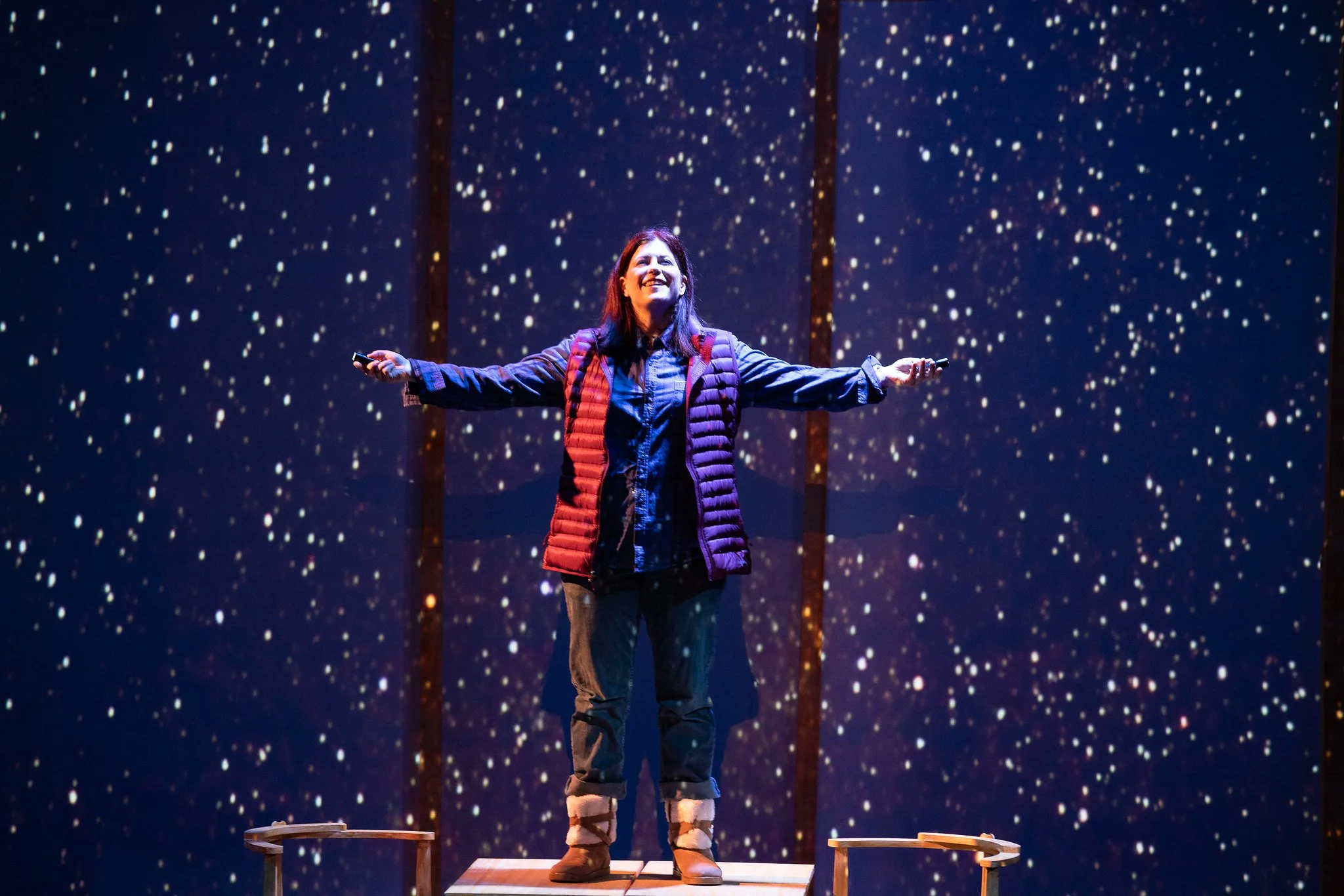
OUR MISSION
AOP's mission is to develop and present new and innovative works of lyric theater, provide a creative home to emerging and established artists, and engage contemporary communities in a transformative operatic experience.

OUR VISION
American Opera Projects is a vision, an unending experiment in storytelling with the central premise that each life is an operatic story waiting to be told — and each telling of that story is an operatic experience waiting to happen.
We are a home for artists to learn, experiment, and create. We are a family of innovators in vocal storytelling. And we will join our audience with respect, passion, and a desire to share a moment in time that will last for years to come.
We will be beautiful.
We will be dangerous.
We will laugh at ourselves.

EQUITY, DIVERSITY, AND INCLUSION
The vision of American Opera Projects begins with storytelling. We reaffirm our commitment to providing–and celebrating–an environment of mutual respect, in which all people can feel free to tell and live their stories.
To us, the American part of our name acknowledges the full diversity represented in the United States, now and throughout the history of our country. These heritages, and their stories, influence American culture in important and meaningful ways. AOP believes that fostering a culture of equity, diversity, and inclusion among our staff, board, artists and collaborators is critical for our success as an organization, and for the advancement of opera as an art form that represents us all.
OUR HISTORY
American Opera Projects is a non-profit organization based in Fort Greene, Brooklyn whose mission is to develop and present new and innovative works of lyric theater, provide resources and opportunities to emerging and established artists, and engage contemporary communities in a transformative operatic experience. American Opera Projects is an unending experiment in storytelling with the central premise that each life is an operatic story waiting to be told, each telling of that story an operatic experience waiting to happen.
American Opera Projects’ programming serves the goal of diversifying the operatic canon by investing in emerging creators and centering the process of creation rather than the product. Ongoing and past programming includes First Chance, AOP’s opera development incubator; Composers & the Voice, AOP’s free, in-house composer and librettist training program; and community-oriented events such as Music as the Message that reimagine how to reach the 21st century audience.
Throughout its history, American Opera Projects has been "known for bringing cutting-edge vocal productions to the masses" (New York Magazine). With a special dedication to producing lyric theater and songs by and about our Fort Greene, Brooklyn community, AOP has become a cultural incubator, vital to the fabric of NYC. AOP is recognized for multimedia work such as Savage Winter (BAM / Pittsburgh Opera, 2019) and The Echo Drift (PROTOTYPE, 2018); interdisciplinary work such as the dance opera Hagoromo starring Wendy Whelan and Jock Soto (BAM Next Wave Festival, 2015) and Darkling, an experimental theatrical poem about the Holocaust (Classic Stage Company, 2006); stories of Black history including The Summer King, about Negro League legend Josh Gibson (Pittsburgh Opera, 2017 / Michigan Opera Theatre, 2018) and Nkeiru Okoye’s Harriet Tubman: When I Crossed That Line to Freedom (Irondale Theater, 2014); and numerous works on LGBTQ+ themes like Paul’s Case (UrbanArias 2013), The Stonewall Operas (NYU / Stonewall Inn, 2019), Patience & Sarah (the first opera about a lesbian relationship, Lincoln Center Festival, 1998), and the chamber opera As One (the first opera about a transgender person), which has become the most produced contemporary American opera since the AOP premiere at BAM in 2014, with over fifty separate productions.
AOP was founded by stage director Grethe Barret Holby (Artistic Director, 1988-2001) in SoHo, New York City in 1988. It was one of the first non-profit arts companies dedicated exclusively to the creation of new operas. Under the leadership of Charles Jarden (Founding Board Member and General Director, 1998-2019), and Steven Osgood (Artistic Director, 2001-2008), AOP relocated to Fort Greene, Brooklyn, expanded its community performances, instituted training programs for emerging composers and librettists, and formed partnerships across the nation to premiere AOP-developed operas.
In 2019, Matt Gray, AOP’s Producing Director since 2003, was promoted to General Director and longtime AOP Music Director Mila Henry was appointed its new Artistic Director. The organization was renamed The American Opera Project, emphasizing the organization’s shift over time from being a collection of projects to a mission-driven pursuit of defining what American Opera is and can be. In 2022, after nearly twenty rewarding years, Matt Gray stepped down, and the Board of Directors appointed Charles Jarden as Interim General Director. Today, AOP's artists and audiences continue to represent all backgrounds and beliefs, and American opera continues to prove itself a vibrant art form that reflects the people and issues of our time. As Opera News said of AOP, "the future of American opera is in good hands."

LAND ACKNOWLEDGMENT
AOP acknowledges that the company operates on the unceded ancestral land of the Lenape, Wappinger, Canarsie, Rockaway, and Matinecock communities. We honor and celebrate all of these indigenous communities, their elders past and present, as well as future generations. We also honor the generations of displaced and enslaved people that built, and continue to build, the country that we occupy today.
AOP invites you to join us in acknowledging all this as well as our shared responsibility.
AOP in the OPERA America Oral History of Opera
Interview with AOP Founder, Grethe Barrett Holby
Interview with AOP Interim General Director, Charles Jarden

THE PEOPLE BEHIND AOP
Our work is made possible by a dedicated community of artists, administrators, board members, and advisors.